


- male
- 30 Years
- 22/01/2025
I've been diagnosed with TB, but my report said something about pulmonary kost. They found pleural fluid in my lungs and did tapping to drain it. Now, I'm experiencing some aches from the scarring. I'm trying to understand what the exact name of my disease is. Is it tuberculosis? What type is it? Or is it something completely different like pneumonia? How are these terms connected? Also, what's the root cause of this issue Im having? Can I have cold food now or after I finish my medication? I'm curious about ways to prevent this from happening again in the future. I had this disease over a year ago and was on medication for about six months. After that, I was mostly okay, just some aches here and there, which the doctor said is normal. Then, a month later, I got diagnosed again with the fluid in my lungs. Why did it come back? Is it dangerous?

Answered by 1 Apollo Doctors

Pulmonologist opinion is advised to the patient.
Dr. Anshul Suggests...
Consult a Pulmonology Respiratory Medicine Specialist
Answered 04/07/2025
0
0

More Pulmonology/ Respiratory Medicine Health Queries
View allI'm curious if having normal oxygen levels in the blood automatically means that the oxygen levels in the lungs are also okay. Like, if the blood's oxygen rate is good, should I assume everything's fine with the lungs too, or is that not always the case?
Yes.
read more![Doctor 1]()
![Doctor 2]()


Answered by 1 Apollo Doctors
I've been dealing with this persistent cough coming from deep in my lungs for 12 minutes straight, around 56 times a day. There's no fever, and it's not a wet cough. I went to a physician who ran a chest X-ray, blood reports, and urine test, but everything came back normal. They suggested I take Pantoprazole and Domperidone, Doxycycline, Diethylcarbamazine (100mg Hetrazan), and Levocetirizine with Montelukast (Montecope) for 5 days. After that, the doctor told me to keep going with Hetrazan and Montecope for another 10 days. Should I be concerned about something underlying that wasn't picked up in the tests? Is there anything else I should consider doing or asking about?
kindly continue the same treatment
read more![Doctor 1]()
![Doctor 2]()
Answered by 1 Apollo Doctors
I'm a 20-year-old student and I've been dealing with bronchitis for the past 10 years. Every April, I struggle with breathlessness and a lot of mucus in my chest, it gets pretty congested. I don't eat anything that would increase mucus, just stick to simple homemade foods, but it keeps happening. I use a nebulizer to help out, but I'm worried if this is something I'm going to have to deal with for life. Do you know if there's any way to cure this or make it better?
yes it is for years till the symptoms cure
read more![Doctor 1]()
![Doctor 2]()
Answered by 1 Apollo Doctors
Health Articles for you
View all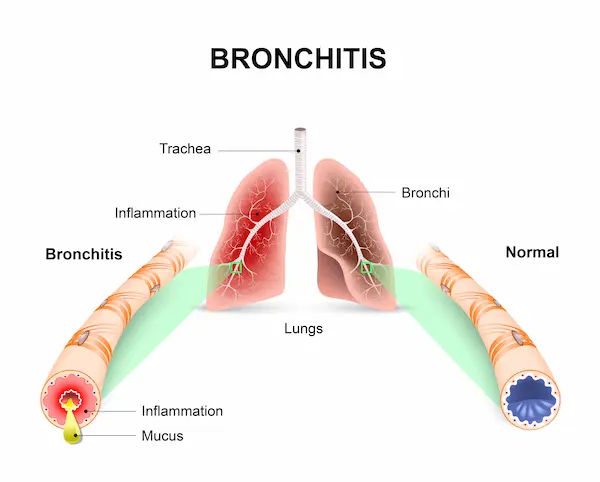
.webp)
Disclaimer: Answers on Apollo 247 are not intended to replace your doctor advice. Always seek help of a professional doctor in case of an medical emergency or ailment.