apollo
  • Male
  • 28 Years
  • 23/01/2025

I'm looking for a medication to help with premature ejaculation that doesn't have any side effects. Could you suggest something safe and effective? I'm really in need of some guidance here.

Doctor 1

Answered by 1 Apollo Doctors

-For premature ejaculation, Dapoxetine (Priligy) is commonly prescribed. It's a short-acting selective serotonin reuptake inhibitor (SSRI) and is generally well-tolerated when taken as needed. Always consult a doctor to ensure safety and suitability f

Dr. Kareemulla Suggests...

Consult a Urologist

Answered 04/07/2025

0

0

Sick? Talk to a doctor now

More Urology Health Queries

View all

My uncle is 55 years old and his biopsy results show moderately differentiated adenocarcinoma of the prostate with a Gleason score of 347 and ISUP grade 2. There's no perineural invasion, but 60 tissues showed tumor presence. The urologist suggested either surgery or injections every three months costing 12000. He's not financially strong, so what should we do? Is the operation life-threatening? Also, who performs this surgery a urologist, surgeon, or some other specialist? We're really worried and need guidance.

Okay, it sounds like your uncle is facing a difficult situation, but there are definitely options and things to consider. It's understandable that you're worried, but it's important to get accurate information. Let's break this down: 1. Understanding the Results: Adenocarcinoma: This is the most common type of prostate cancer. Moderately Differentiated: This means the cancer cells, while not normal, don't look extremely abnormal under the microscope. Gleason Score 3+4=7 (ISUP Grade 2): A Gleason score of 7 (3+4) indicates intermediate-risk prostate cancer. ISUP grade 2 is also associated with intermediate risk. This is a good starting point, but other factors matter. No Perineural Invasion: This is a positive sign, as perineural invasion is associated with poorer outcomes. 60/60 cores positive: This indicates the cancer is present in all or most of the biopsy samples. This is a sign of a significant amount of cancer. 2. Treatment Options: Surgery (Radical Prostatectomy): This involves removing the prostate gland and some surrounding tissue. It is a common and effective treatment for prostate cancer. Not generally life-threatening: While there are risks with any surgery (bleeding, infection, etc.), prostate removal itself isn't typically life-threatening. Performed by a Urologist: A urologist is a specialist in the urinary and reproductive system and performs prostatectomies. Long-term outlook: Studies show that most people who have prostate removal surgery early in the course of their cancer are alive 15 years later. Hormone Therapy (Injections): These injections can help slow down or stop the growth of prostate cancer cells by reducing testosterone levels. Cost: The cost of these injections every three months at Rs. 12,000 is significant. Not a cure: Hormone therapy is not a cure for prostate cancer, but it can be an effective way to manage it. 3. What to do now: Second Opinion: It is very important to get a second opinion from another urologist or oncologist (cancer specialist). This is especially important given the financial concerns. Discuss all options: Explore all treatment options with the doctors and discuss the pros and cons of each, especially considering the financial implications. Consider a clinical trial: Some clinical trials might offer treatment options that are less expensive or provide new approaches. Seek Financial Assistance: Look into financial assistance programs offered by cancer organizations or hospitals. Discuss with your urologist: Talk to the urologist about the specific type of surgery being considered and the potential risks and benefits. Focus on long-term outlook: While it's natural to be worried, remember that with appropriate treatment, many men with prostate cancer have a good long-term prognosis. 4. Important considerations: Gleason score is just one factor: While the Gleason score is an important indicator, it's not the only factor in determining the best course of treatment. Individualized treatment plan: Treatment plans should be tailored to the individual's specific circumstances, considering their age, overall health, and the characteristics of the cancer. It's crucial to gather as much information as possible, discuss all options with healthcare professionals, and make an informed decision that is right for your uncle.

read more
Doctor 1Doctor 2

Answered by 1 Apollo Doctors

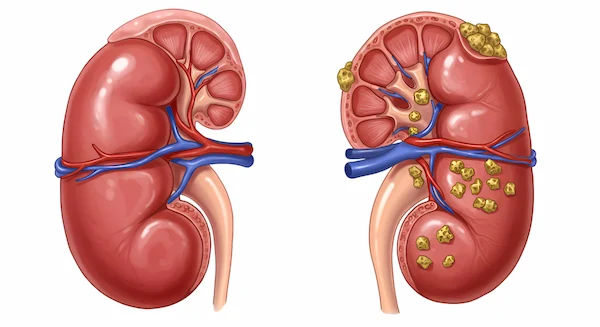
I've been having abdomen pain for the past 2 days and the ultrasound showed a 6mm calculus in the VUJ. Should I consider surgery or are there other treatment options like medicines that could help?

Certainly surgery is the treatment of option than conservative treatment.

read more
Doctor 1Doctor 2

Answered by 1 Apollo Doctors

I've been struggling with phimosis where I can't pull back the skin during an erection. Is there any Ayurvedic treatment that can help with this? Can it be fixed without needing surgery?

Phimosis is a condition where the foreskin can't be pulled back from the head of the penis. It's normal in babies and small children, and they usually grow out of it. It can also be caused by infections, scar tissue, and skin diseases, and may need to be treated with steroid cream or surgery

read more
Doctor 1Doctor 2

Answered by 1 Apollo Doctors

Disclaimer: Answers on Apollo 247 are not intended to replace your doctor advice. Always seek help of a professional doctor in case of an medical emergency or ailment.