


- Male
- 32 Years
- 22/01/2025
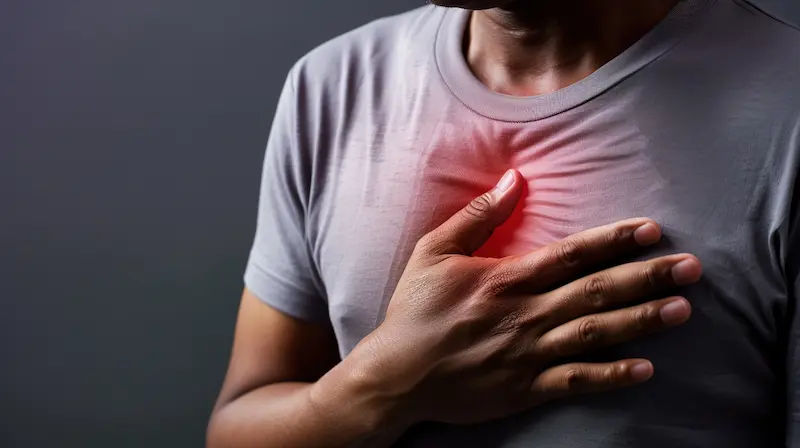
I've been experiencing this weird right chest pain for the past three days, and it's been bothering me quite a bit. It even seems to make my hand hurt, which is really concerning. I'm not sure what's causing this discomfort. Could it be something serious, or is it just some kind of acdt problem? I'm not really familiar with what that means. What should I do?

Answered by 1 Apollo Doctors

take tablet zerodol ,twice a day for 3 days
Dr. Kareemulla Suggests...
Consult a Cardiologist
Answered 04/07/2025
0
0

More Cardiology Health Queries
View allI'm really worried about my dad who's 55 and has diabetes and high blood pressure. He went for a cardiac check-up about 10 days ago. The ECG came back abnormal but the 2D echo was normal, and the TMT report was positive. They started him on clopitab 75mg along with his regular meds for BP and diabetes, and now they've advised an angiogram. But here's the thing, he has no chest pain or symptoms, and he walks daily. I'm wondering if a CT angio might be a better option since it uses barium dye, and if the calcium score is negative, wed know theres less risk for a cardiac arrest. Could you give me some advice on this?
Follow advice of your cardiologist


Answered by 1 Apollo Doctors
I've been feeling light-headed every now and then for the past few months. I'm 38, weigh 95 kg, and am 5'7". I don't smoke or drink, and I've been avoiding sugar and cholesterol. My thyroid level is 5.8. I recently started jogging two months ago, and my ECG says I have sinus bradycardia. Should I be worried about this? Is it related to my new exercise routine or something else?
"Based on your information, sinus bradycardia is a condition where the heart beats slower than normal. In your case, since you are experiencing light-headedness, it may be related to your sinus bradycardia. I recommend you to take Tab. Propranolol 10mg once daily to help regulate your heart rate and alleviate the symptoms. However, it is important to consult with a doctor for proper evaluation and monitoring of your condition."
Answered by 1 Apollo Doctors
My dad is 57 and has severe mitral regurgitation with an LVEF of 30. Doctors recommended a MitraClip surgery. Where in India can we get this done? We're based in Bangalore but open to traveling for the best care.
For MitraClip surgery in India for a patient with severe mitral regurgitation and LVEF of 30, you can consider Kauvery Hospital which offers this procedure in several locations including Chennai, Bangalore, and other cities. It's important to consult with multiple specialists to determine if MitraClip is the most suitable option and to get personalized advice for your father's specific condition
Answered by 1 Apollo Doctors
Health Articles for you
View all



Disclaimer: Answers on Apollo 247 are not intended to replace your doctor advice. Always seek help of a professional doctor in case of an medical emergency or ailment.