apollo
  • Male
  • 49 Years
  • 22/01/2025

I'm a bit worried after seeing my chest x-ray results. It mentions mild bilateral perihilar and basal congestion along with borderline cardiomegaly. Can you explain what this means, and how I might be able to treat it or manage the symptoms?

Doctor 1

Answered by 1 Apollo Doctors

That could be age related changes if you have no symptoms like chest pain,chest discomfort,shortnes of breath,then visit Physician for appropriate management.if not you can ignore it

Dr. Chandra Suggests...

Consult a Cardiologist

Answered 04/07/2025

0

0

Sick? Talk to a doctor now

More Cardiology Health Queries

View all

I'm 29 and since 2018, I've been experiencing skipped or missed heartbeats, which make me feel really uneasy. In 2019, I had an ECG, an echo, and a TMT done, and they didn't find anything. Recently, I've had two more ECGs and still nothing showed up. The doctor prescribed ivabradine and some anxiety medicine. I also discovered I have hyperthyroidism. I got some relief, but the symptoms have started again, and I'm really scared and worried that something serious is going on. Can you help me figure out what's happening and where I should go to find out the exact cause?

It's understandable to feel anxious and concerned about your symptoms. Skipped or missed heartbeats, known as palpitations, can be distressing but are often benign, especially with normal ECG, echo, and TMT results. Hyperthyroidism can contribute to palpitations and should be managed effectively. Since you have already been prescribed ivabradine and an anxiety medication, it's important to continue following your doctor's advice and taking your medications as directed. Given your ongoing symptoms and anxiety, it might be beneficial to seek a comprehensive evaluation at a specialized center, such as a tertiary care hospital with a cardiology and endocrinology department. They can conduct further tests, such as a Holter monitor to track your heart rhythms over 24-48 hours, and refine your treatment plan. Additionally, managing anxiety through therapy, relaxation techniques, and lifestyle changes can also help alleviate your symptoms. Please consult with your healthcare provider to discuss your concerns and consider a referral to a specialist if needed.

read more
Doctor 1Doctor 2

Answered by 1 Apollo Doctors

I'm just a bit confused after seeing my Echo results. It shows I have normal pulmonary arteries, but the summary mentions mild PHT. Is that really possible to have mild PHT even if the pulmonary arteries look normal? Just trying to understand what this might mean for my health.

yes it is possible, there might be slight increase in pressure due to various other reasons

read more
Doctor 1Doctor 2

Answered by 1 Apollo Doctors

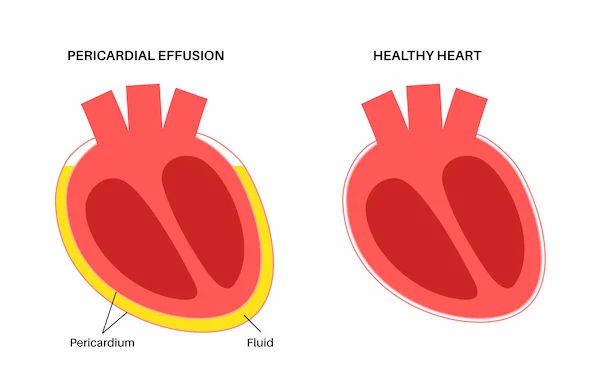
I'm really worried about my dad. He's 50 and has been dealing with some health issues for the last ten days. He fainted last Saturday and his blood pressure dropped to 9363, with a fever of 102F. Our regular doctor gave him paracetamol, but then the same thing happened again on Sunday. We rushed him to another doctor who found moderate pericardial effusion and admitted him to the ICUU. They ended up putting in a temporary pacemaker because his pulse rate was falling below 50 bpm. It seemed to help, but then after they removed the pacemaker, his atrial fibrillation was varying quite a bit. The doctor adjusted his medication, and now the AF is still shifting between 110 and 130. They mentioned something about fluid dissolving, but I'm not sure what the next steps should be. Any advice on how we should proceed?

It sounds like your father has been through a lot with the pericardial effusion and subsequent atrial fibrillation. It's good to hear that 90% of the fluid has been dissolved. To continue managing the atrial fibrillation, the doctor may prescribe medications such as Metoprolol (25-50mg twice daily) to help control the heart rate. Additionally, blood thinners like Warfarin (2.5-5mg once daily) may be prescribed to prevent blood clots. It's important to monitor his heart rate and rhythm regularly and follow up with the doctor for further evaluation and management.

read more
Doctor 1Doctor 2

Answered by 1 Apollo Doctors

Disclaimer: Answers on Apollo 247 are not intended to replace your doctor advice. Always seek help of a professional doctor in case of an medical emergency or ailment.