


- male
- 60 Years
- 20/02/2025
I'm a bit worried about my recent CT report, and I could really use some guidance. It mentions that there's a collapse consolidation in my left lower lobe and some specks of calcification with fibronodular changes. They also found a few confluent nodules and scattered small nodules in both lung fields, plus ground glass opacity in my right lower lobe. The impression notes something about mediastinal lymphadenopathy and a mild pleural infusion on the left. Can someone explain what all these terms mean and what I should be concerned about? Is this indicative of a serious condition or something treatable?

Answered by 1 Apollo Doctors

take antibiotics,consult pulmonologist
Dr. Anshul Suggests...
Consult a Pulmonology Respiratory Medicine Specialist
Answered 04/07/2025
0
0


Ask Apollo
AI powered Health Chatbot
-
Collapse Consolidation in Left Lower Lobe
- Indicates lung tissue collapse and fluid or infection presence. Requires further evaluation for infection or other causes.
-
Specks of Calcification with Fibronodular Changes
- Suggests old infections or granulomatous disease. Monitor for changes or symptoms.
-
Confluent and Scattered Small Nodules
- Could indicate infection, inflammation, or malignancy. Further tests like a biopsy may be needed.
-
Ground Glass Opacity in Right Lower Lobe
- May suggest inflammation, infection, or early fibrosis. Needs correlation with symptoms and possibly follow-up imaging.
-
Mediastinal Lymphadenopathy
- Enlarged lymph nodes could be due to infection, inflammation, or malignancy. Further investigation is necessary.
-
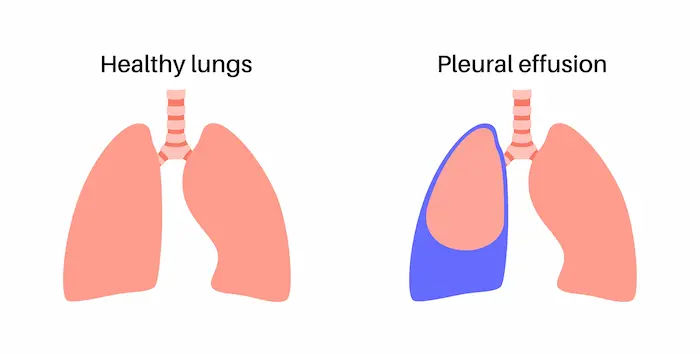
Mild Pleural Effusion on the Left
- Fluid in the pleural space; often due to infection, heart failure, or malignancy. Requires clinical correlation and possibly drainage.
Recommendations
- Consult a pulmonologist for a comprehensive evaluation.
- Consider further diagnostic tests like a PET scan or biopsy.
- Monitor symptoms and follow up with imaging as advised by your healthcare provider.
Recommended next steps
Consult a Pulmonology Respiratory Medicine Specialist
Answered 10/09/2025
0
0
More Pulmonology/ Respiratory Medicine Health Queries
View allI'm really worried because I've had this persistent cough for around 20 days now, and in the mornings, it's even harder because I cough up a bit of blood. Should I be concerned about a serious health issue, or could it just be something related to the changing seasons?
Sputum for AFB and chest x-ray pa view is advised to the patient.


Answered by 1 Apollo Doctors
I'm currently dealing with bronchitis and take Combitide125, two puffs daily, to manage it. I've just gotten over a fever, but now I can't seem to shake off this persistent cough. I'm wondering if it's safe to start taking an expectorant like Ascoril along with my inhalers. Is that advisable, or should I avoid mixing them?
yes
Answered by 1 Apollo Doctors
I'm feeling really anxious about some symptoms I've been experiencing. Lately, I've noticed I'm short of breath, especially when I'm trying to sleep. It's been accompanied by a whizzing sound, and I'm not sure what's causing it. Plus, I've realized that one of my ankles is swollen on the inside. Could these things be related? What might be going on?
do chest xray
Answered by 1 Apollo Doctors
Health Articles for you
View all



Disclaimer: Answers on Apollo 247 are not intended to replace your doctor advice. Always seek help of a professional doctor in case of an medical emergency or ailment.